
There isn't one pair of jeans that will fit and flatter every body in exactly the same way.
Finding jeans that fit comes down to four things: the rise, the leg shape, the length and the fabric. What makes a pair work is how those four things sit against your individual proportions, not just your body shape.
That is the whole answer. Everything below is how I apply it when I'm standing in a fitting room with a client.
Why the Same Jeans Look Different on Two Women
When I started my styling career, denim was the area I knew the least about. It wasn't until my first client that I realised how much there was to understand, so I spent a week immersed in it.
I tried on what felt like a million pairs. Skinny, slim, straight, boyfriend, wide-leg, bootcut, flare, cropped, ankle, high-rise, mid-rise, low-rise, across different brands, washes and fabrics.
What I learnt very quickly was that the jeans that looked incredible on me did not work on someone else.
After more than 12 years of styling women of different heights, shapes and proportions, that is still the biggest thing I'm thinking about when I help a client find denim.
Start With Your Proportions, Not Just Your Body Shape
Body shape is a useful starting point. It is not the whole picture.
Two women can have the same body shape and look nothing alike in the same jeans. One might be 160cm with a long torso and shorter legs. The other might be 175cm with a short torso and long legs. Their shoulder width, hip width and waist placement could all be different too.
When I'm assessing which jeans will suit a client, I'm looking at:
- Her height
- Torso length compared with leg length
- Where her natural waist sits
- Hip width
- Shoulder width
- Thigh and calf proportions
- Where she carries more or less shape
- Which areas she wants to highlight
- How she wants the jeans to fit and feel
This is why I use body shape as a guide rather than a set of rules. The aim is proportion and balance across the whole silhouette.
How to Choose the Right Rise in Jeans
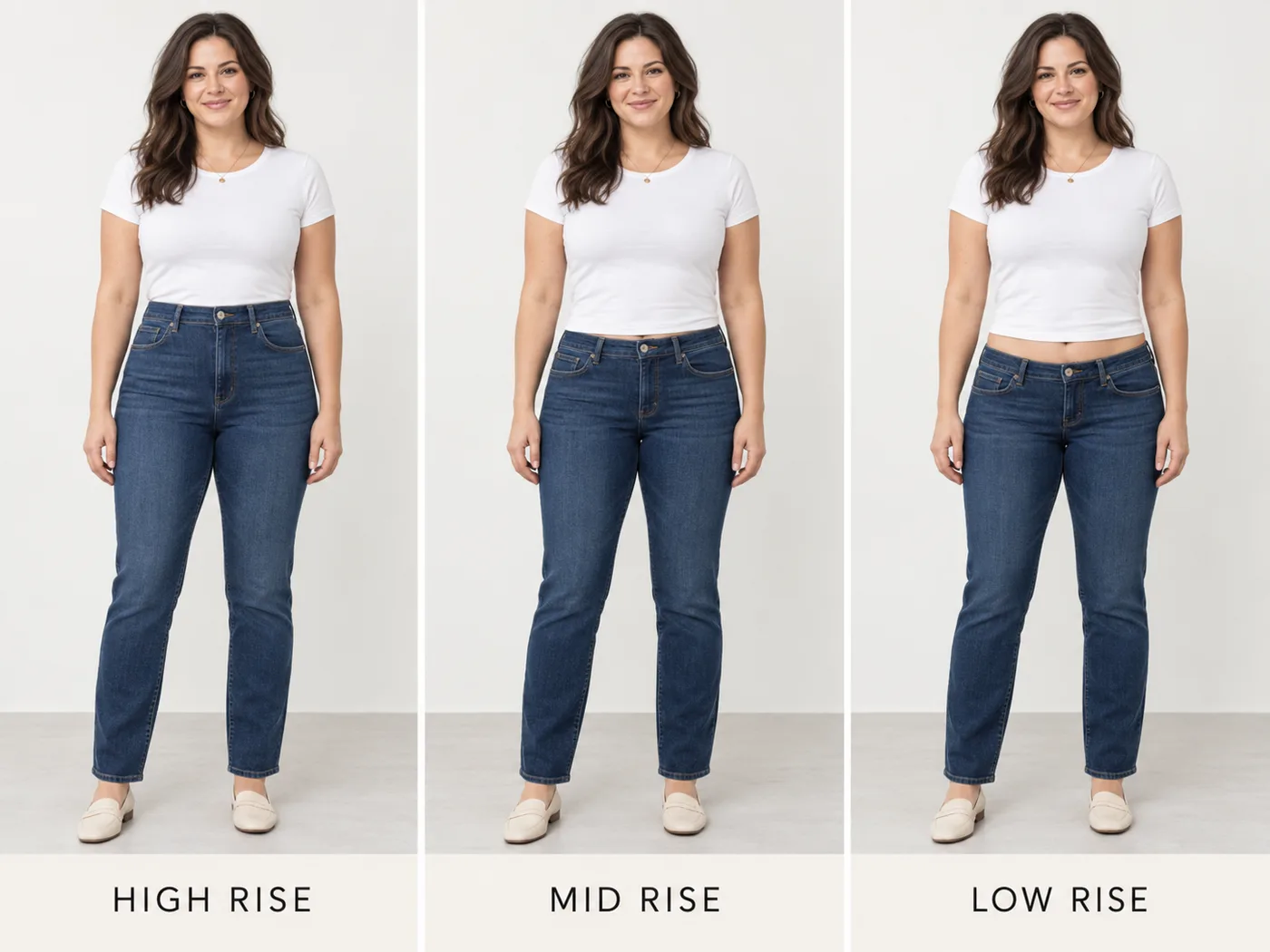
The rise is the distance between the crotch seam and the top of the waistband. It changes your proportions more than almost anything else in a pair of jeans.
As a rough guide:
- Low-rise sits below the natural waist.
- Mid-rise sits around or just below the belly button.
- High-rise sits closer to the natural waist and can extend above the belly button.
Don't get fixated on the label. One brand's high-rise is another brand's mid-rise, because every brand works from its own pattern.
High-Rise Jeans
A high rise defines the waist and creates length through the leg.
This is why I wear a very high waist myself. At 173cm, my natural waist sits high. If I wear a lower rise and tuck my top in, the waistband lands across a wider part of my torso instead of my narrowest point. Moving it up changes my proportions entirely.
An extremely high rise on a very short torso can take over the body, so in that case we bring it down slightly.
Mid-Rise Jeans
A mid-rise works when you want more space through the torso, or when a very high waistband feels uncomfortable. It's also a good option for shorter torsos where a high rise sits too close to the ribcage.
Low-Rise Jeans
Low-rise is back, which does not mean everyone needs to wear it.
It can work on longer torsos, or when you want to create a longer line through the upper body. The question is what the rise does to your proportions, not whether it's currently in fashion.
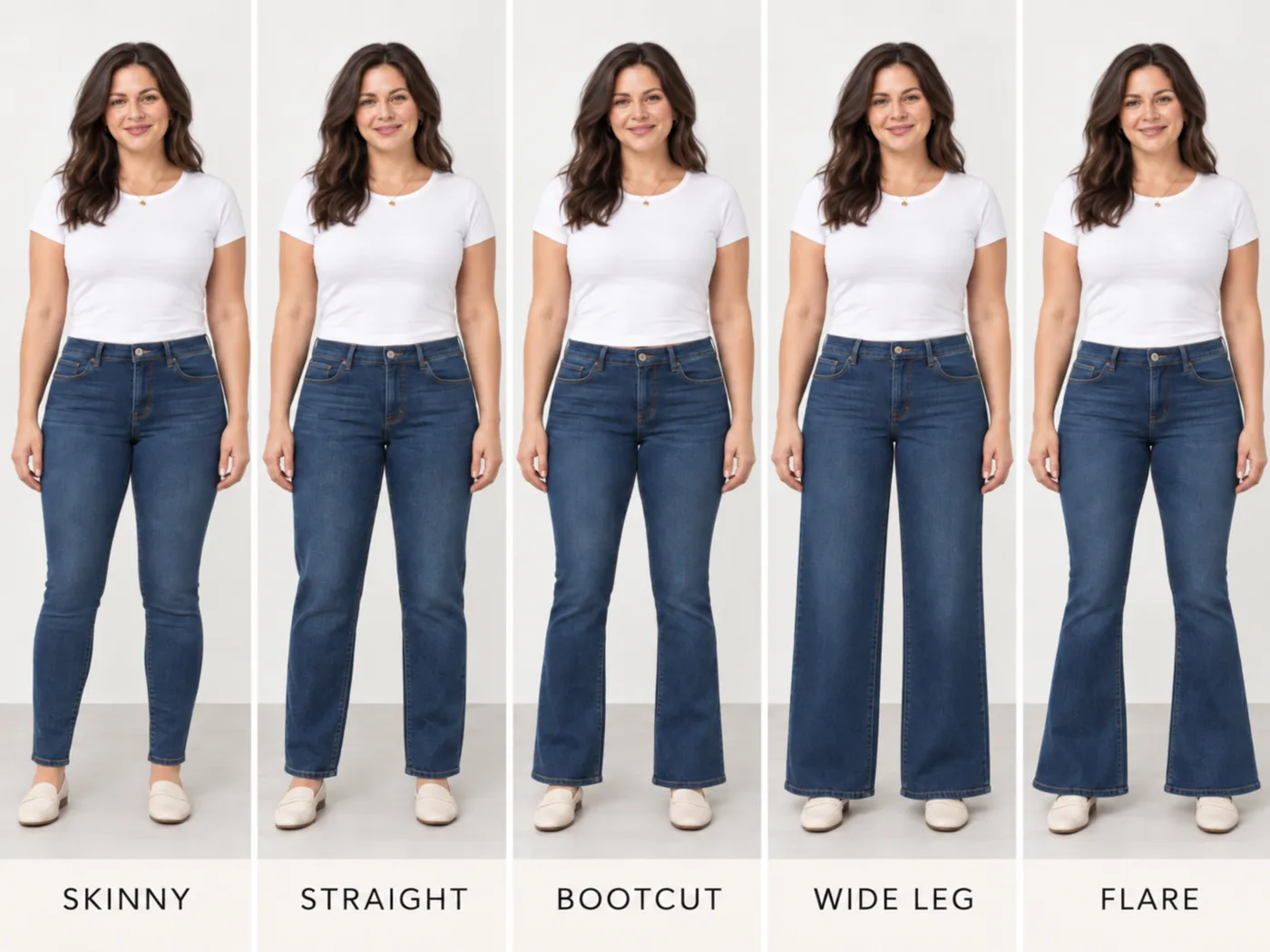
Straight, Wide-Leg, Bootcut or Skinny: Which Jean Shape Is Best?
For years the default was a mid or high-rise skinny. Everyone owned them, whether or not the silhouette worked for them.
On some women they looked fantastic. On others, especially where the upper body was wider than the lower body, they made the legs look narrow and the upper body look heavier by comparison.
We have far more choice now. Straight, wide-leg, flare and bootcut are everywhere. The same rule applies. A wide-leg jean being in fashion doesn't mean every wide-leg jean will suit you.
I have seen a beautiful wide-leg create a stunning silhouette on one client and swallow another.
The width matters. The length matters. The rise matters. And where the jean starts widening from the body matters.
Someone petite may look incredible in a softly wider straight leg, where an exaggerated wide leg would drown her. Someone taller has the vertical length to carry more volume.
So I assess the degree of the silhouette rather than saying a woman can or cannot wear a style.
How Long Should Jeans Be?
Length is the most overlooked part of getting denim right.
The measurement worth knowing is your inseam: from the crotch seam down the inside of the leg to the hem. Most standard jeans sit around a 30 to 32-inch inseam, though this varies by brand and style. For a full-length jean I look for around 34 inches because of my height and leg proportions.
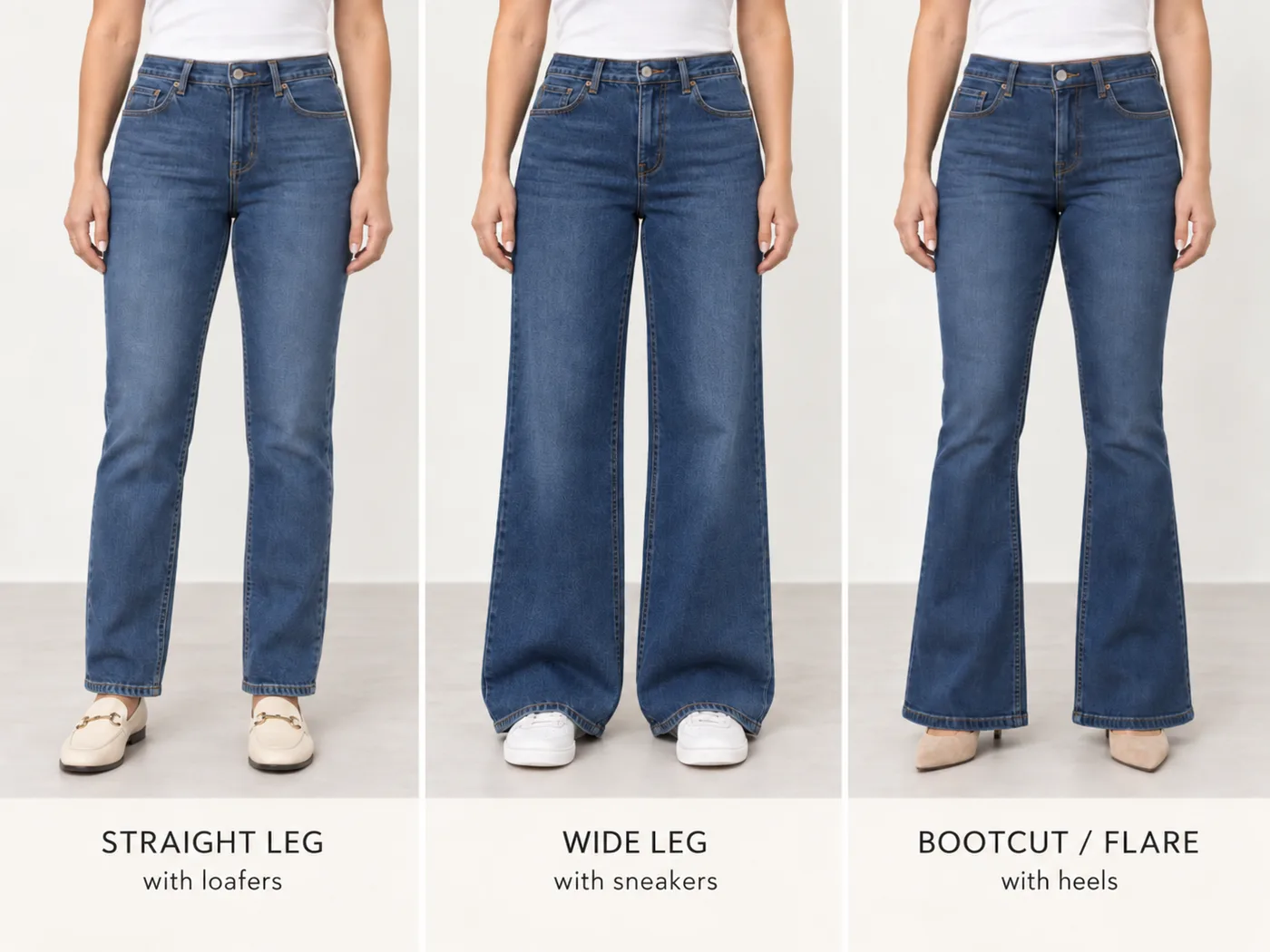
Your ideal length depends on the leg shape and the shoes you'll wear with them.
- A straight leg may be designed to finish at the ankle.
- A full-length wide leg needs more length to create that long line.
- A bootcut or flare may need to be longer again, depending on whether you're in flats, sneakers, boots or heels.
This is why I think about shoes at the same time as the jean. A beautiful pair loses its shape completely if the hem finishes at an awkward point.
Don't Ignore the Wash
The wash is another tool for balancing proportions.
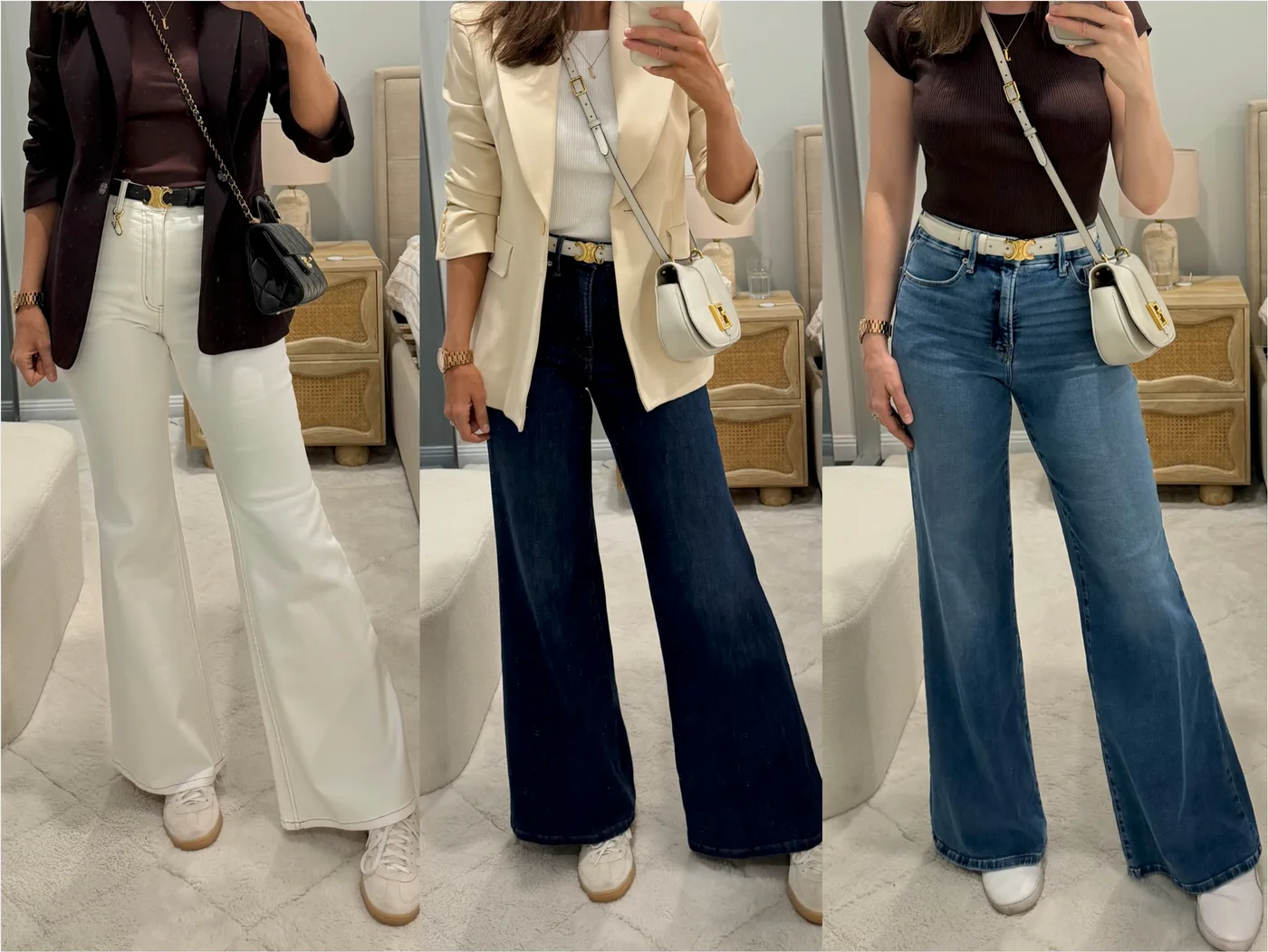
A solid dark or medium blue creates a cleaner, more continuous line through the leg. Fading, whiskering and heavy washed effects add contrast, which draws the eye to those areas.
If a client feels self-conscious about her thighs, I won't put her in a fitted jean with strong fading across the thigh, because it adds emphasis exactly where she doesn't want it.
If her upper body is wider than her lower body, bringing detail, movement or contrast into the lower half can create balance.
Colour matters too. The intensity of your denim should work with your colour palette and the contrast level of the outfit, not only your shape. If your palette has never been properly assessed, here's why in-person colour draping matters.
Stretch vs Rigid Denim
Fabric changes the fit almost as much as the cut does.
100% cotton denim has a firmer, more structured feel. It creates a beautiful shape, but it is less forgiving when there is a big difference between your waist, hip and thigh measurements.
Denim with 1 to 2% elastane gives you flexibility and makes it easier to fit curves through the waist, hip or thigh. For a smaller waist with a fuller hip, or a fuller tummy with slimmer legs, that small amount of stretch makes an enormous difference.
More stretch is not automatically better. Look at the quality and the recovery of the fabric. You don't want jeans that have stretched out and lost their shape by lunchtime.
Why Your Jean Size Changes Between Brands
If you're a 10 in one brand and a 12 or 14 somewhere else, don't let the number throw you.
Every label works from its own pattern block, measurements, fabrics and intended fit. You'll even take different sizes across styles within the same brand. A rigid high-rise might need one size while a stretch straight leg from that same label fits you in another.
I take multiple sizes into the fitting room with every client, because what the garment is doing on the body matters far more than the number on the label.
Size is information. That's all.

The Best Jeans for Your Body Shape
Here is a starting point for each shape. Your height and proportions still sit alongside it.
Best Jeans for a Pear or Triangle Body Shape
A pear or triangle shape carries more width through the hips and thighs with a narrower waist and upper body. The fit issue I see most often is denim that fits the hip and thigh but leaves a gap at the waistband.
I look for:
- High-rise styles to define the waist and lengthen the leg
- Straight-leg jeans
- Softer wide-leg styles
- Bootcut
- Full-length hems
- Clean medium to dark washes
- Some stretch through the hip and thigh
- Contoured waistbands that follow the difference between waist and hip
The width of a wide leg is the thing to watch. If it comes out too sharply from the hip it adds volume you don't want. A straighter wide leg or a controlled flare usually creates a better line.
I'd style these with a tucked or half-tucked top, and a belt if we want more attention at the waist.
Best Jeans for an Hourglass Body Shape
An hourglass has a defined waist with shoulders and hips in balance. The frustration here is almost always waistband gaping.
If the jeans fit through the hip and bottom but gap at the back of the waist, sizing down isn't the answer. You end up compressing the hip and thigh instead.
Look for:
- Contoured waistbands
- Mid to high-rise
- Straight leg
- Bootcut
- Flare
- Slim leg if you prefer a closer fit
- Enough stretch to handle the difference between waist and hip
With this shape I want to keep the balance that's already there rather than adding volume anywhere.
Best Jeans for an Inverted Triangle Body Shape
An inverted triangle has more width through the shoulders or upper body than the hips. These are close to my own proportions, which is why I gravitate towards more drama through the leg.
I look for:
- Wide-leg jeans
- Bootcut
- Flares
- Straight leg with some width through it
- Full-length hems, or exposing the ankle with a washed straight or boyfriend style
- Detail or interest through the lower half
A little more volume through the leg balances a stronger shoulder line.
If you're petite with an inverted triangle, the principle is identical. You just reduce the scale. A smaller bootcut or a kick flare gives you enough width to balance the shoulders without overwhelming your height.
Best Jeans for a Rectangle Body Shape
A rectangle has less difference between the shoulder, waist and hip measurements. Depending on the client, I'll either create more shape through the lower body or put more emphasis at the waist.
Worth trying:
- Mid to high-rise
- Straight leg
- Wide leg
- Bootcut or flare
- Barrel or curved silhouettes where the proportion works
- Considered pocket placement or detail
If waist definition is the goal, where the waistband sits and how you style the top become as important as the denim.
Best Jeans for an Oval or Apple Body Shape
An oval or apple shape carries fullness through the torso and tummy with narrower hips or legs.
The two things I hear most often are “the jeans fit my legs but I can't do them up around my tummy” and “they fit my waist but now they're baggy through the legs.”
Changing size won't fix either one. You need a different cut and fabric.
I look at:
- Slim straight leg
- Straight leg
- Mid or high-rise depending on torso length and comfort
- Denim with some elastane
- Fabrics with good recovery
- Wash or detail through the leg when we want attention lower down
The goal is room and flexibility through the waist without excess fabric through the legs.
What if You're Petite?
Being petite doesn't rule out wide legs, flares or anything else with drama in it. Scale is what matters.
Look at where the jean starts to widen, how much volume is in the leg and where the hem finishes. A narrower wide leg creates beautiful length when it's paired with the right rise and a full-length hem.
If you're constantly having standard lengths altered, look at brands offering dedicated petite lengths. Cutting several inches off the bottom of a jean can change the shape the leg was designed to have.
What if You're Tall?
For taller women, length is the first thing I check. There's no point finding the right rise, waistband and leg shape if a full-length jean finishes several centimetres above where it should.
Look for brands with long or tall options, and check the actual inseam measurement rather than trusting the description.
At 173cm I need around a 34-inch inseam for the full-length silhouette I want.
Height also lets you carry more width through the leg, though your proportions still decide how much.
The 3 Things I Check in the Fitting Room
Shopping with a client, I can usually tell within seconds whether a pair is worth pursuing. If you're on your own, check these three.
1. The Waistband and Rise
Do the jeans sit where you want your waist to look like it sits?
Check for:
- Gaping at the back
- Digging in at the waist
- Pulling across the front
- The waistband rolling or folding
- Needing to pull them up constantly
- An uncomfortable or overly long crotch
Sit down as well as standing in front of the mirror. Jeans have to work while you're moving through your day, not for the 15 seconds you're standing still in a fitting room.
2. The Hip, Bottom and Leg
Turn around. Look from every angle.
Check whether the fabric is:
- Pulling across the thigh or hip
- Creating excess folds under the bottom
- Sagging through the seat
- Collapsing at the knee
- Adding volume you don't want
- Sitting smoothly where the style is meant to be fitted
Then walk, sit and bend. If you're already adjusting them in the fitting room, you'll be adjusting them all day.
3. The Length and Overall Proportion
Step back and look at the whole silhouette. Don't stand there inspecting your thighs in isolation.
- Where does the hem finish?
- Do your legs look proportionate to your torso?
- Does the width of the jean balance your upper body?
- Would the length work with the shoes you'll actually wear?
Sometimes a pair technically fits and the proportions still aren't right. This last check is the difference between jeans you own and jeans you love.
How to Stop Buying Pair After Pair
The fastest way to make denim shopping less frustrating is to learn what consistently works on you.
When you find a great pair, write down the brand, size, rise, inseam, fabric composition, the leg shape, where the waistband sits, and how wide the hem is.
You can measure a favourite pair lying flat at home. That gives you a reference point next time instead of starting from scratch.
And don't decide that because one straight leg didn't suit you, straight legs aren't for you. It may simply have been the wrong straight leg. A few centimetres through the rise, thigh, knee, hem or inseam changes the way a jean sits on your body completely.
If your wardrobe is already full of pairs that never quite worked, this is where I'd start: how to declutter your wardrobe when you can't let go of anything.
Finding the Best Jeans for You
When I shop with a client I'm not looking for whichever shape is trending. I'm looking at the person in front of me. Her shape, proportions, colouring, lifestyle, personal style, comfort, and how the jeans need to work with the rest of her wardrobe.
That's the real answer to finding jeans that fit. Once you understand what your body needs from the cut, rise, fabric and length, you stop buying jeans because they looked good on someone else, and you get much more selective about what earns a place in your wardrobe.
Frequently Asked Questions
There is no single style that suits every version of a body shape. Pear and triangle shapes usually suit a high rise with a straight or softly wide leg and a contoured waistband. Hourglass shapes suit a contoured waistband with a straight, bootcut or flare. Inverted triangles suit more width through the leg. Rectangles suit straight, wide and barrel shapes with waist definition added through styling. Oval and apple shapes suit a slim straight leg with some elastane. Your height and proportions still change the answer.
Look for a contoured waistband, which is cut to follow the difference between your waist and hip rather than sitting in a straight line. Sizing down usually makes things worse because it compresses the hip and thigh. A small amount of elastane also helps.
Every brand uses its own pattern block, measurements and fabrics, so sizing is not consistent between labels, or even between styles within one label. Take multiple sizes into the fitting room and judge the fit rather than the number.
Most standard jeans sit around 30 to 32 inches. Taller women often need 34 inches for a full-length silhouette. The right length also depends on the leg shape and the shoes you'll wear, so decide those at the same time.
Yes. Reduce the scale rather than avoiding the style. Choose a narrower wide leg, check where the jean starts to widen, and keep the hem full length with the right rise.
Rigid 100% cotton denim holds a structured shape but is less forgiving when there is a big difference between your waist, hip and thigh. Denim with 1 to 2% elastane accommodates that difference more easily. Check the recovery of the fabric so the jeans don't stretch out during the day.